7 Days Endless Plains (Serengeti & Ngorongoro)
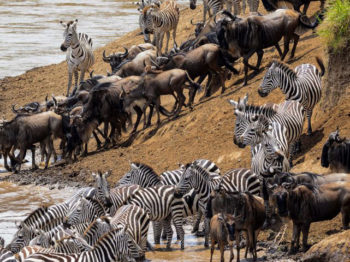
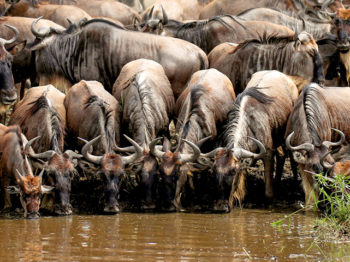
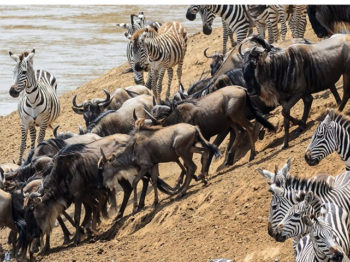
Experience the wonder of the endless open plains of the Serengeti where the strongest survive in the natural spectacle also known as ‘the greatest show on Earth where the wildebeest move between the vast flatlands of the Serengeti and the Masai Mara Game Reserve. This itinerary includes an area north of the central Serengeti National Park where the majority of the wildebeest migration can normally be found from August to October. Finish with Ngorongoro Crater, a breathtakingly beautiful setting and the best place in East Africa to see the Big Five.
- Overview
- Itinerary
- Price
- Before You Go
Itinerary at a Glance
Arrival & Fly To Serengeti National Park
Game Drive At Serengeti (North)
Full Day Game Drive At Serengeti National Park (North)
Drive To Serengeti National Park Central Area (Seronera) And Game Drives
Hot Air Ballon & Transfer To Ngorongoro Crater Enroute Oldevai Gorge Museum
Game Drive
Fly to Kilimanjaro international Airport
Arrival & Fly To Serengeti National Park
Upon arrival at Kilimanjaro International Airport, you will meet Luxury Africa representative who will assist you for connecting a local flight direct to Serengeti National Park. Arrival at Serengeti National Park our Guide will be waiting for you at Kogatende Airstrip. Our guide will brief you about the Safari and The Serengeti ecosystem in general followed by short game drive as you drive to the lodge.
Game Drive At Serengeti (North)
Full Day Game Drive At Serengeti National Park (North)
Since movements of the Wildebeest Migration can be unpredictable, after breakfast, you will go for another full day game drive to increase your chances of witnessing the famous river crossing. The game viewing up here is superb with river crossings pretty much guaranteed every day. There is no distinct movement as the herds tend to cross back and forth over the river, following the rains and subsequent fresh grasses.
Drive To Serengeti National Park Central Area (Seronera) And Game Drives
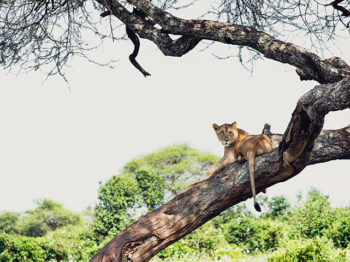
After breakfast at the Lodge, you will drive to the central. The sheer volume of animals here is extraordinary. The Seronera River weaves its way through the Serengeti, providing waters for all species of wildlife. You will also see the distinctive rocky outcrops, the famous kopjes which characterize the Serengeti landscape. Kopjes are very hard and often granite. They have been aged at maybe 600 million years old and created even before the earth’s surface was pushed up from the ocean. Lions and other cats frequent these stony places and they are also home to snakes and hyraxes. Slowly weathering in wind and rain, they are peeling off in layers, which you may see on close inspection.
Hot Air Ballon & Transfer To Ngorongoro Crater Enroute Oldevai Gorge Museum
Wake up early for an hour-long, sunrise, hot-air balloon. The balloon crew will assist as you clamber into your balloon basket for take-off just before sunrise. As you raise the Maasai Mara plains opens up before your eyes feast on the golden sunrise, enchanting sceneries, plains-game below as the winds gently blows the basket deeper into the reserve. The pilot is at hand pointing out at the wildlife below with plenty of photographic opportunities unfolding. Soar silently with 360 degrees of spectacular savannah, followed by a Champagne breakfast in the bush. Afterwards, drive to Ngorongoro National Reserve.
The Ngorongoro Crater is often called ‘Africa’s Eden’ and the ‘8th Natural Wonder of the World. The stunning crater of Ngorongoro is a unique home for many, many species of Tanzania’s wildlife. This morning, after breakfast, you will head south-east towards Ngorongoro, a distance of 145km which will take around 3 ½-hours. The Adventurous from the Great Serengeti National Park to Ngorongoro Conservation Area is filled with great game viewing of deferent animals. En-route you will visit Oldevai Gorge Museum. Olduvai Gorge is one of the most important archaeological sites on earth. The geological strata exposed in the gorge reveal a remarkable record of animal and human evolution from about two million until fifteen thousand years ago. Among the significant finds from Olduvai is the range of stone tool types, the thousands of animal fossils – both extinct and extant species – and the fossil bones of hominids (pre-Homo Sapiens) and early Homo sapiens. From here you proceed to the lodge for lunch and later relax at the lodge.
Game Drive
After breakfast, you will be taken 2000ft down the crater. At one side there’s the Lerai Forest, classic mountain forest landscape with almost tropical characteristics. This is good elephant country, so keep your eyes peeled. By the side of the nearby swampland is what is sometimes called the ‘elephant graveyard’ as the mighty male tuskers at the end of their lives come to chew on the soft, swampland grasses once their teeth have failed them. Afterward ascending and drive to your Lodge set on a crater rim.
Fly to Kilimanjaro international Airport
After breakfast, you will drive to Lake manyara airstrip for your flight to Kilimanjaro Airport to connect with your home flight.
Prices are in USD, per person, based on double occupancy
Tour Includes
Tour Excludes
Getting here
Airlines servicing Kigali International Airport are: RwandAir, Kenya Airways, Ethiopian Airlines, Brussels Airlines, KLM, Qatar Airways and Turkish Airlines. Scheduled helicopter transfers within Rwanda are available through Akagera Aviation.
Passport and visas
Applicants should have a valid passport or another acceptable travel document. The document must have a validity of at least six months on the day of entry into Rwanda. As of 1st January 2018, nationals of all countries receive a visa on arrival at Kigali International Airport and all land borders. Visas can be applied for before departure, by submitting an application online, with the option to pay online or upon arrival.
Vaccinations
Travelers should ensure they are up to date with vaccinations, following the advice of their local healthcare provider. A certificate of yellow fever vaccination is required. At least 8 weeks before your trip, check the latest country-specific health advice from the National Travel Health Network and Centre (NaTHNaC) on the TravelHealthPro website. https://travelhealthpro.org.uk/country/187/rwanda, each country-specific page has information on vaccine recommendations, any current health risks or outbreaks, and factsheets with information on staying healthy abroad.
The greatest health risks in Rwanda are accidents and malaria. Much of Rwanda lies at too high an elevation for malaria to be a major concern, but the disease is present and prophylactic drugs are recommended. Travellers should seek professional medical advice on taking anti-malarial medicines and take precautions to avoid mosquito bites, especially between dawn and dusk.
COVID-19 Requirements
All travellers must provide printed, documented proof of a negative COVID-19 RT-PCR test, taken within 72 hours of boarding your flight to Rwanda, immediately upon arrival.
Note: The negative RT-PCR test result will be the only type accepted. Other tests, such as Rapid Diagnostics Test (RDTs), are not accepted.
All travellers are required to complete and submit a “Rwanda Passenger Locator Form” to assist in contact tracing. To access this form, please https://travel.rbc.gov.rw/travel/.
You must provide printed, documented proof of a negative COVID-19 RT-PCR test each time they visit Volcanoes and Nyungwe National Parks. Rapid Diagnosis Test (RDTs) is accepted for check-in at any hotel or lodge and in Akagera National park
Note: all passengers arriving from or have traveled to India and Uganda in last 7 days are required to complete 7 days in mandatory quarantine upon arrival at the designated hotels. Please visit https://rbc.gov.rw/index.php?id=188 for an up-to-date list of approved. This quarantine requirement does not apply to transit passengers.
Note: COVID rules and regulations are subject to change from time to time. Get in touch with us for accurate new rules before travel.
Climate
Fractionally south of the Equator and with much of the country lying at altitude, Rwanda enjoys an agreeable tropical highland climate. Peak temperatures rarely exceed 30°C (86°F) in the daytime or drop below 15°C (59°F) at night. Akagera is generally the warmest and the Virunga Mountains the coolest and the average daily temperature in Kigali is 21°C (70°F). There are two rainy seasons in a year, from mid-February to May and mid-September to mid-December. The dry season, from June to mid-September, sees light cloud cover and occasional light rainfall. The roads and paths tend to be easier to navigate in this period
Money
The Rwandan franc (Rfw) is the principal currency, although US dollars are widely accepted. Expect to pay for local services in cash, in Rwandan francs. Dollar series of 2006 below are note accepted in national park and for exchange they have a lesser exchange value together with smaller notes below 50$. A growing number of places accept credit and debit cards, with Visa being more widely accepted than Mastercard. It’s best to check when making a booking. Cash can be exchanged at banks and private forex bureaux (bureau de change) but Both are closed on Sundays and public holidays. ATMs can be found in Kigali and nearly all major cities. It may be impossible to exchange traveler’s cheques away from the capital. Western Union facilities are common.
Electricity: 230v 50Hz
Time: GMT + 2:00
Telephone: International telephone code +250
Getting here
There are three major international airports in Tanzania and all have good international connections from most major cities in Europe and North America.
- Kilimanjaro International Airport (JRO): common entry point into the country for those exploring the Northern Safari Circuit that includes the Serengeti, the Ngorongoro Crater, Tarangire National Park and Lake Manyara.
- Julius Nyerere International Airport (DAR): for those visiting Dar es Salaam or the Southern Safari Circuit that includes Selous Game Reserve, and Ruaha National Park.
- Abeid Amani Karume International Airport (ZNZ): for those heading straight to Zanzibar
Passport and Visas
Applicants must ensure that their passports have a validity of at least six months and at least two unused visa pages before submitting their application. You can now apply for an Online Visa to visit the United Republic of Tanzania (both Tanzania Mainland and Zanzibar). Visa applicants are advised to make their applications through the Official Tanzania Immigration website (www.immigration.go.tz) ONLY and Not through any other links
Note: Visas can be bought on arrival in Tanzania at all international airports and overland borders.
Climate
Tanzania has a tropical climate but has regional variations due to topography. In the highlands, temperatures range between 10 and 20 °C (50 and 68 °F) during cold and hot seasons respectively. The rest of the country has temperatures rarely falling lower than 20 °C (68 °F). The hottest period extends between November and February (25–31 °C or 77.0–87.8 °F) while the coldest period occurs between May and August (15–20 °C or 59–68 °F).
Health
Malaria is usually top on the list of visitors’ worries, and prevention goes a long way towards keeping you protected. Make sure to visit your doctor to get a prescription for the anti-malarial drug the best suit you. The yellow fever vaccination is no longer officially required when entering Tanzania; however, this is still a requirement if you wish to visit Zanzibar.
Vaccination
The best choice of vaccines for your trip depends on many individual factors, including your precise travel plans. Vaccines commonly recommended for travelers to Africa include those against Health Effects Such as Tetanus, Diphtheria, Polio, Typhoid, Hepatitis A, Hepatitis B, Yellow fever, Rabies and Meningitis. Certificate required for entry into, or travel between, some African countries. Several of these vaccines require more than one dose or take time to become effective. It is always best to seek advice on immunization well in advance, if possible, around 6 weeks before departure.
At least 8 weeks before your trip, check the latest country-specific health advice from the National Travel Health Network and Centre (NaTHNaC) on the TravelHealthPro website. https://travelhealthpro.org.uk/country/220/tanzania, each country-specific page has information on vaccine recommendations, any current health risks or outbreaks, and factsheets with information on staying healthy abroad.
COVID-19 requirement
All travelers must provide printed, documented proof of a negative COVID-19 PCR test taken within the past 72 hours immediately upon arrival in Tanzania. Any person failing to present a negative COVID-19 PCR test result will not be allowed to enter the country.
Each passenger is also required to complete an individual form. Children traveling with a guardian/parent will also need to complete their own form. To complete the Travelers Surveillance Form you will need your passport information, your travel details, including times and dates. Upon Submission of the form, travelers will receive a confirmation notification that will contain their Unique Health Code (UHC) which they will present upon arriving in Tanzania at health desk. Please note that this form can only be submitted within 24 hours before arrival. To access this form, please visit. https://afyamsafiri.moh.go.tz/#/home
Note: COVID rules and regulations are subject to change from time to time. Get in touch with us for accurate new rules before travel.
Language
English is widely spoken but few words of Swahili can be useful and will be appreciated greatly by locals.
Money
Major foreign currencies, particularly-US$, and travelers cheques are accepted and are convertible at banks and bureau de changes in the main town and tourist areas. Credit cards are not widely accepted and carry poor exchange rates. Some banks in Arusha, Moshi and Dar es Salaam offer ATM facilities against international credit cards, but ATMs are not widely available elsewhere
Time: 3hrs + GMT
Electricity: 230V, but power failures, surges and troughs are common. Bring a universal adaptor and a torch (flashlight) or headlamp.
Telephone: International telephone code +255